

The best example of perfect packaging in nature is the egg. It protects its contents both mechanically and from the effects of atmospheric conditions. Similarly, packaging for the protection of valuable objects must safeguard against external factors, compensate for climatic fluctuations, and remain emission-free and hygroscopic.
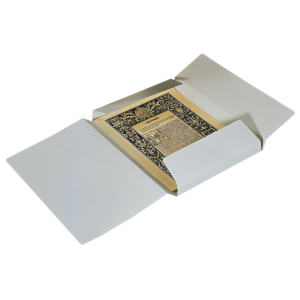
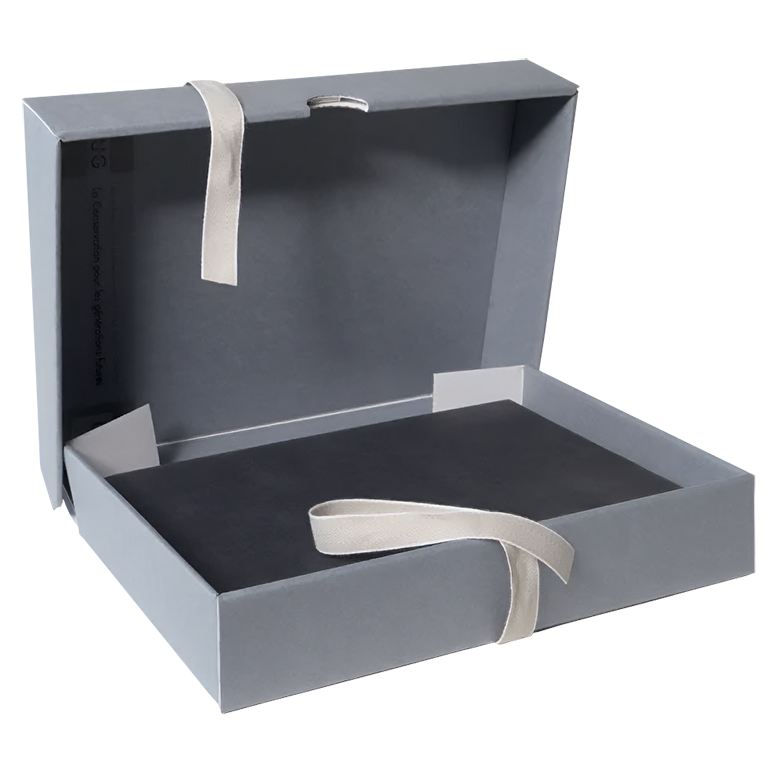
Clamshell boxes (hinged)
They work like a book – intuitively opened, popular for maintenance. They effectively protect the contents, and their form is functional.
Wrap-around boxes (snap-shut folders)
Derived from three-flap folders, they offer better protection thanks to thicker materials and a proper closure. They combine effectiveness with material economy.
Archive boxes
They are used for organising, storing, and protecting archival materials. These are the most commonly used containers in archives.
Archive boxes for storing rolls
Ideal for maps, wallpapers, or posters – they protect against light and environmental influences. Objects can also be rolled onto a tube and placed in a suitable archival box.
Slipcases and shelf folders
They provide five-sided protection for books, leaving the spine open. They protect against dust, light, and contact with adjacent books. The combination of a slipcase with a stand makes it easy to gradually replenish the shelf and creates order.
Two-piece boxes
Used for a variety of cultural objects – from small thimble boxes to large textile storage structures.
Foldable boxes for storing film rolls
Made from natural, white, unbuffered archival cardboard, 0.5 mm thick. They replace commonly used plastic packaging.