Filling paper losses is one of the most challenging stages of preserving documents, books, and archival materials. It requires precision, knowledge of material properties, and the ability to assess the object's condition before undertaking any actions. Learn the most important information about this process.
Paper losses are caused by numerous factors, which often act simultaneously and reinforce each other. The most common causes are:
Any loss, even a small one, mechanically weakens the entire sheet. The missing fragment alters the stress distribution in the paper, causing the edges of the loss to fray and enlarge the damage. If the loss covers an area with text or an illustration, part of the information contained in the document is irretrievably lost.
Damage to the corners and edges of a sheet particularly quickly leads to further tears when handled. Therefore, filling in missing fragments of paper is not solely an aesthetic procedure, but above all a stabilising action for the object.
The decision to fill gaps is not always straightforward. The conservator must assess whether the intervention will bring more benefits than risks. Filling cavities is justified when:
Not every defect requires immediate intervention. Objects intended solely for storage under controlled conditions can function for a long time without repair if their condition is stable.
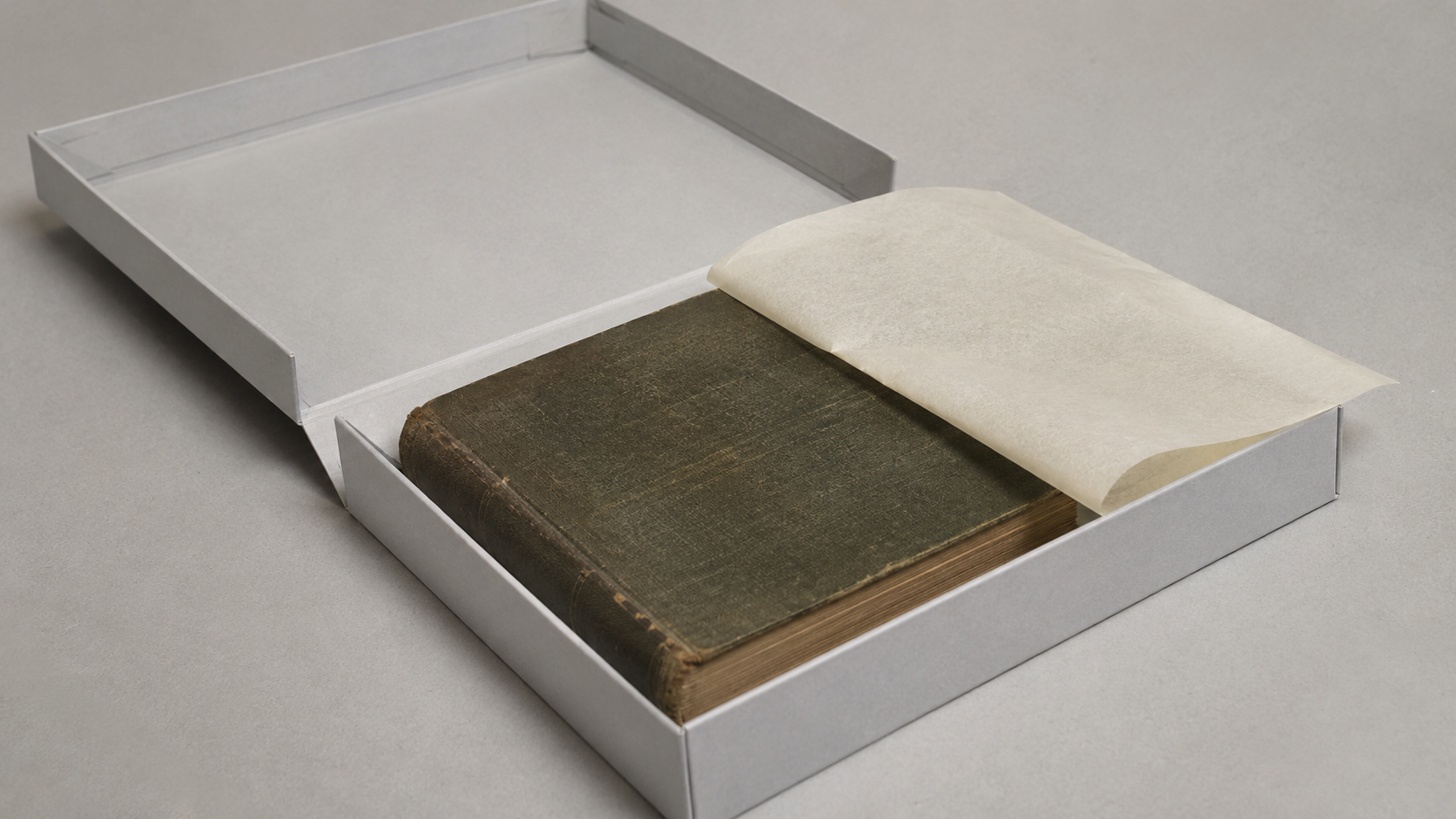
Conservation maintenance, consisting of improving storage conditions and securing the object in appropriate packaging, can be sufficient. Filling in losses in historical documents should always be preceded by an analysis of their condition and documented photographically before work commences.
Assessing the condition of the paper is a stage that determines the choice of methods and materials. The conservator examines several parameters simultaneously. The first step is to assess the paper's pH using indicators or electronic meters. Paper with a pH below 6 requires neutralisation before filling, as an acidic environment accelerates the degradation of newly introduced materials. Another element is the assessment of mechanical strength. Brittle paper, which breaks with gentle bending, requires strengthening before or concurrently with filling losses.
A conservator also checks for active biological hazards. Traces of mould, a characteristic smell, or visible fungal colonies indicate the need for disinfection before repairs. Paper with an active biological infection should not undergo wet conservation processes, as moisture promotes further microbial growth. Analysing the type of paper is also important. Handmade, machine-made, coated, and newsprint papers differ in fibre structure, weight, and reaction to water. This directly influences the selection of materials for mending.
Photographic documentation prior to conservation work should include images taken in daylight, from the side, and, if possible, using transmitted light. Transmitted light photographs reveal the paper's structure, watermarks, and subtle damage that is not visible under normal lighting conditions.
The selection of materials for filling losses in paper is based on several conservation principles:

The materials used in professional paper conservation are divided into several groups.
The first group consists of conservation papers for filling. They are chosen based on basis weight, colour, fibre structure, and pH. The paper for filling should have a basis weight similar to or slightly lower than the original, so as not to dominate the surrounding material. The pH should be neutral or slightly alkaline. This provides an alkaline buffer protecting the original.
The second group comprises pulp slurries for filling, used in the wet method. A filling pulp slurry is a suspension of cellulose fibres in water, applied to the loss manually or using specialised equipment (for leaf-casting). The pulp fills the void and, once dry, forms a cohesive, durable patch integrated with the original. The composition of the slurry is selected to best match the structure of the paper being repaired.
The third group comprises Japanese papers and tissues, used as patches applied to the underside or the top of a loss. Their thin structure and long fibres ensure high strength with minimal thickness. This allows for discreet filling without a noticeable sticker effect.
Japanese paper, produced using the traditional handmade method from plant fibres such as kozo, mitsumata, and gampi, is one of the most commonly used materials in paper conservation. Its properties stem directly from the structure of long, intertwined fibres, which give it exceptional strength at a very low basis weight. It is available in basis weights ranging from a few to several tens of grams per square metre. This allows for precise matching to the object being repaired.
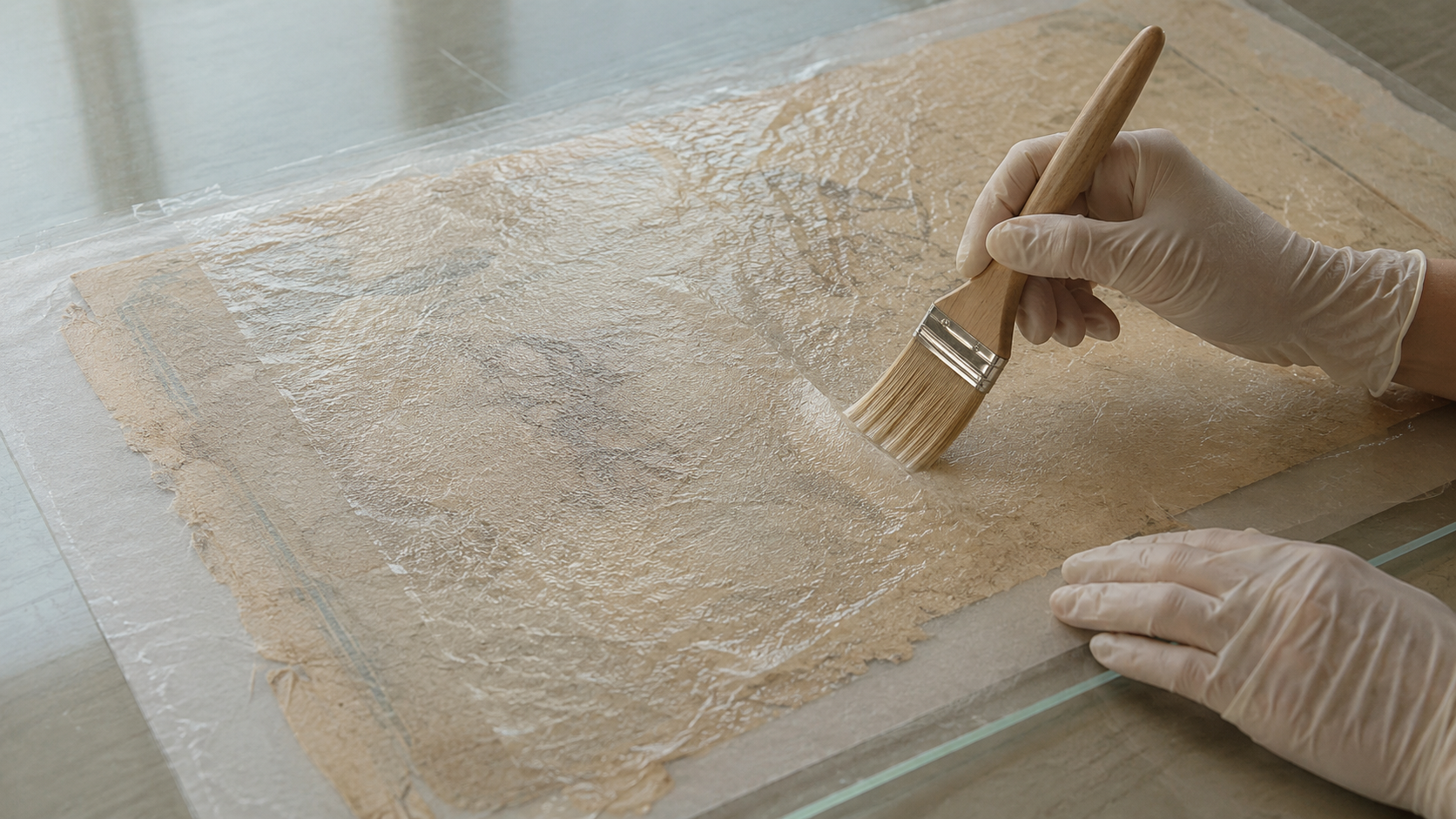
In conservation practice, Japanese paper is used in several ways. As a patch adhered to the underside of a sheet, it reinforces the area around a loss and fills it if the loss is small. As a backing for paper pulp, it stabilises the edges of a loss while applying wet pulp. As a material for lining an entire sheet, it provides uniform reinforcement for a severely weakened paper.
Conservation tissues differ from Japanese paper primarily in their fibre composition and intended use. Tissues made from cotton or linen fibres are used where high chemical neutrality and long-term stability are required. The choice between Japanese paper and conservation tissue depends on the type of object being repaired, the required strength of the patch, and the planned method of adhesion.
When selecting Japanese paper for a specific task, conservators pay attention to the direction of the fibres in the sheet. The patch should be cut so that the fibre direction is aligned with the fibre direction of the original. A mismatch in directions causes stress during changes in humidity and can lead to the patch detaching or the paper creasing.
Adhesives are one of the most important elements in the process of filling losses. Their selection influences the durability of the repair, the reversibility of the intervention, and the aesthetic appearance of the object. Paper conservators primarily use water-based adhesives, which are reversible and do not introduce chemically harmful substances into the object.
Starch paste, made from wheat or rice, is a traditional conservation adhesive. It is characterised by good adhesion to paper, a neutral pH, and complete reversibility upon wetting. Rice paste is more transparent when dry and is used where a high degree of invisibility of the join is required. Wheat paste has a slightly higher viscosity and is better suited for bonding thicker papers.
Methylcellulose and hydroxypropyl methylcellulose are synthetic conservation adhesives with a neutral pH and good reversibility. They are used as an alternative to starch pastes, particularly when the object is sensitive to biological contamination, as synthetic adhesives do not provide a medium for micro-organisms. Their disadvantage is slightly lower adhesion compared to starch paste.
Paraloid B-72 in solvent solution is used sporadically, mainly for adhering highly acidified papers or in situations where contact with water is undesirable. It is a reversible adhesive in a suitable solvent, however, its use requires caution due to the properties of the solvent.
Manual filling of cavities is a method used for objects requiring precise, individual work. The process follows a specific sequence of actions, the order of which is important for the quality of the final result.
The first stage is preparing the workspace and the object. The sheet is laid out on a clean, smooth surface, preferably glass or a plastic board. The edges of the damage are cleaned of loose fibres using a soft brush. If the edges are heavily frayed, they can be lightly moistened with distilled water and straightened before proceeding with adhesion.
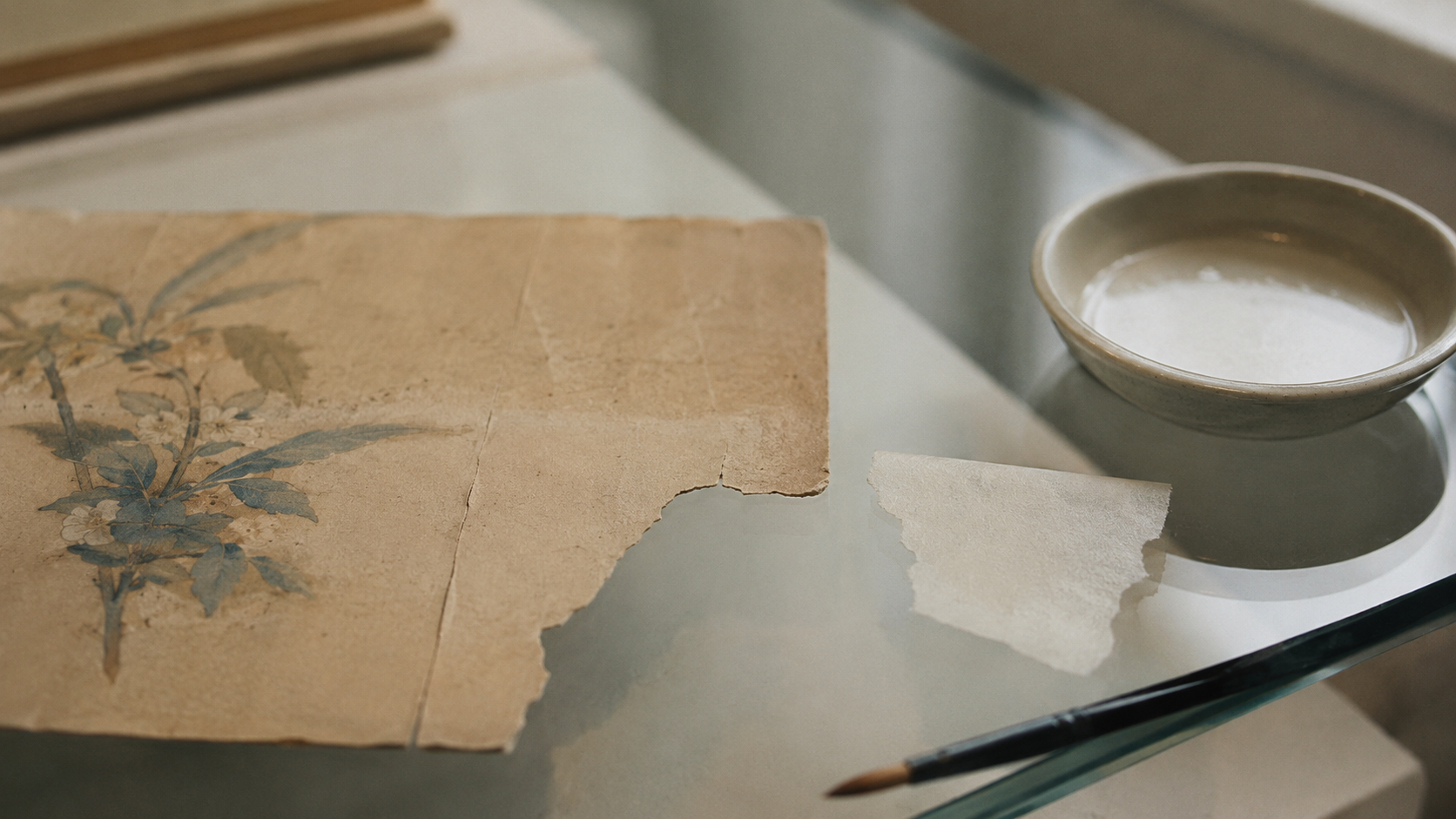
The second stage is the preparation of the infill material. Japanese paper or conservation tissue is selected based on its weight and colour. The patch is prepared by tearing, not cutting with scissors. Tearing creates a feathered edge which, once adhered, blends into the original and is far less visible than a sharp cut edge. The patch should be slightly larger than the loss, overlapping the original by a few millimetres on all sides.
The third stage is applying the patch. The adhesive is applied in a thin layer to the patch or directly to the edges of the damage, depending on the method and type of adhesive. The patch is applied from the underside of the sheet, aligned, and pressed through blotting paper. Excess adhesive is immediately removed with a damp brush. The sheet is dried under a light weight to prevent creasing.
The fourth stage is tonal retouching, if required. The completed fill often differs in colour from the original. Conservators use watercolours or conservation paints to subtly balance the tone, not aiming for a perfect match, but to reduce the contrast between the fill and the original. Retouching should be carried out with reversible materials and documented on the conservation record card.
No. If an object is stable and stored in controlled conditions, sometimes protective measures are sufficient without infilling.
Restoration is justified when damage weakens the sheet, makes reading the content difficult, or if the document is to be used, digitised or bound.
Conservation uses conservation papers, paper pulps, blotting papers and Japanese papers, selected according to the type and condition of the original paper.
Japanese paper is characterised by its high strength despite its thinness, which allows damaged areas to be reinforced and repaired without excessively thickening the sheet.