Bleaching paper is one of the most controversial treatments in the conservation of library and archival collections. It allows for the restoration of legibility and aesthetic appearance of documents, but at the same time carries the risk of irreversible damage to the structure of cellulose fibres. Sometimes, according to some conservators, what is „old and dirty” should also remain so. This is why it is so important to know what this process should look like.
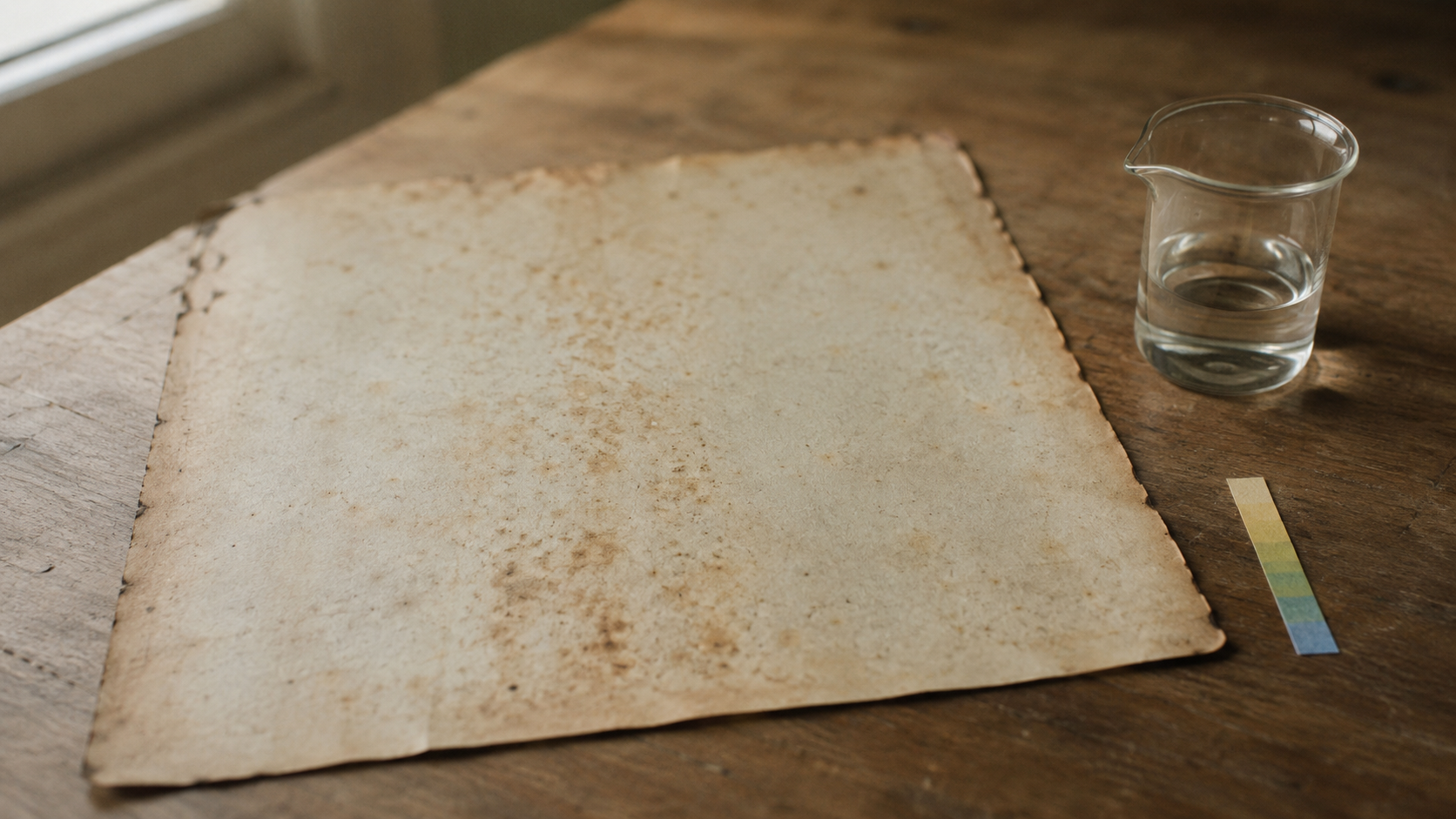
The yellowing of paper is the result of complex chemical processes occurring within the structure of cellulose and lignin. Paper produced by industrial methods since the mid-19th century contains significant amounts of lignin and wood acids. Under the influence of light and oxygen, lignin oxidises and forms chromophores, which are chemical groups that absorb visible light. It is these that give paper its yellow or brown hue.
Acidity of the environment accelerates degradation. Acidic paper, produced using alum and rosin, hydrolyses faster than alkaline paper. Acids attack the glycosidic bonds in cellulose chains, shortening and mechanically weakening them. This results in brittle, fragile, and discoloured paper. Additional factors include:
Moulds and bacteria produce enzymes that break down cellulose, leaving behind characteristic brown or black stains.
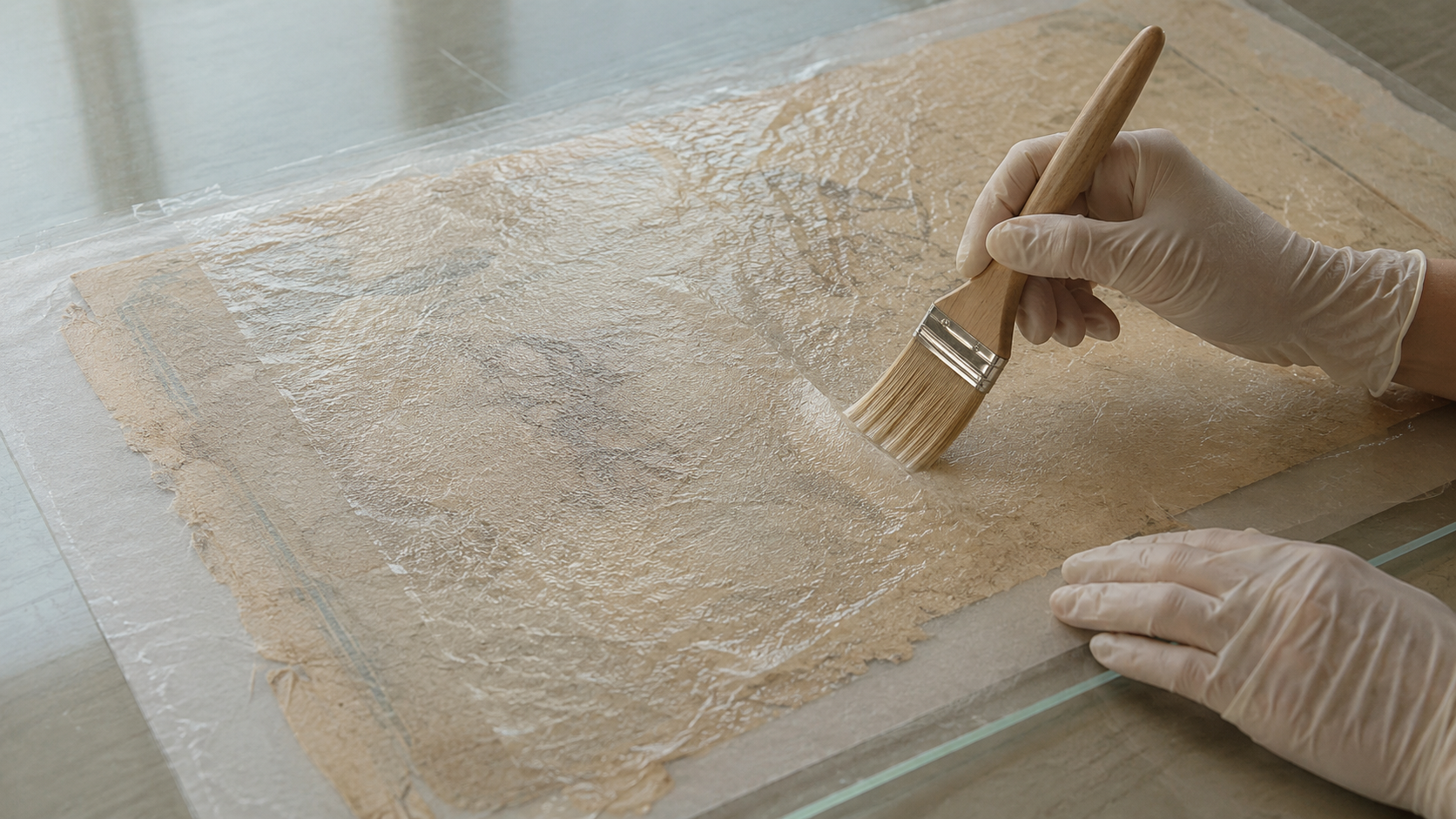
Conservation bleaching of paper involves the chemical or photochemical removal of chromophores responsible for discolouration. It is not about mechanically cleaning the surface, but about changing the chemical structure of the colouring substances so that they no longer absorb light. The treatment is carried out on objects that have already been mechanically cleaned and treated with water, are structurally stable, and have at least been neutralised before the bleaching bath.
Paper bleaching conservation methods differ from industrial ones primarily in the concentration of agents and process control. A conservator works on a single object, monitors each stage, and can stop the treatment at any time. Industrial bleaching of paper pulp takes place on a mass scale and with significantly higher concentrations of reagents.
Conservators have several groups of methods, differing in their mechanism of action, effectiveness, and degree of invasiveness.
Chlorine-based methods are historically the oldest approach. Sodium hypochlorite and chloramine T act as oxidising agents, breaking down lignin chromophores. Chloramine T is milder than sodium hypochlorite and has long been regarded as a safer alternative; however, studies have shown that both substances can leave behind residual chlorination by-products which, over time, accelerate fibre degradation.
Peroxide methods are based on hydrogen peroxide, used in aqueous solutions or in vapour form. Hydrogen peroxide oxidises chromophores without introducing chlorine into the paper structure, but requires precise control of pH and temperature. It is often used in conjunction with calcium or magnesium buffers. Reductive methods, such as sodium borohydride, reduce chromophores to colourless forms and are effective for certain types of discolouration, particularly after prior oxidation.
Photochemical bleaching uses UV radiation. This method is less chemically invasive, but more difficult to control and less commonly used in practice. Potassium permanganate is an oxidising agent that has been used historically, though less frequently today due to the risk of leaving brown deposits of manganese dioxide.
Whitening is primarily justified when discolouration makes it difficult to read text or reproduce an object. Archival documents with severe mould, water damage, or oxidation stains may require intervention if their legibility is compromised.
The second case concerns graphic works, drawings and engravings in which the paper background forms an integral part of the composition. Severe yellowing alters the tonal relationships and distorts the perception of the work.
Bleaching is also used when preparing objects for digitisation or exhibition, when the aesthetics of the presentation are important for public reception. The decision should always be preceded by detailed documentation of the object's condition. Photographs, pH measurements, microbiological tests and analysis of the paper's composition form the basis for risk assessment and method selection.
Bleaching agents work not only on chromophores but also on cellulose, hemicelluloses, and other paper components. Even with careful handling, they can shorten polymer chains. This translates to a reduction in mechanical strength.
Residual reaction products pose a further threat: chlorine bound within the paper's structure can be gradually released and catalyse further degradation, while hydrogen peroxide, if not completely removed, continues oxidation after the treatment is finished.
Inks and pigments react differently to bleaching agents than paper does. Some iron gall inks darken in the presence of oxidising agents, and organic pigments can fade or change colour. It is essential to test the resistance of each element of the object before treatment. Paper, after bleaching, can also become more susceptible to re-staining if not properly protected and stored.
This change in approach stems from several parallel bleaching processes. Research carried out since the 1980s has shown that the negative effects of bleaching agents do not necessarily become apparent straight away. The paper may look fine immediately after treatment, with degradation only accelerating after several or more than a dozen years. Conservation ethics have evolved towards minimal intervention, and the principle of reversibility of treatment is difficult to fulfil in the case of chemical bleaching.
The attitude towards the aesthetics of aging has also changed. The traces of time on a historical document carry information about its history and authenticity, and the removal of discolouration can erase evidence of provenance and storage conditions, which are valuable to researchers.
Institutions such as the Jagiellonian Library and the National Library apply bleaching selectively, following detailed analysis and consultations. IFLA and ISO standards for the conservation of library collections recommend caution and documentation of every intervention.
Deacidification and bleaching are treatments with different purposes that often complement each other but do not substitute for one another. Deacidification neutralises acids in paper and introduces an alkaline reserve that slows down further degradation. It does not remove existing discolouration, but it halts the processes leading to the formation of new ones.
For many objects, deacidification is sufficient and safer. Acidic paper, which does not have severe discolouration but is brittle and susceptible to further deterioration, will benefit more from deacidification than from bleaching. Dewatering methods, such as bathing in a magnesium hydroxide solution, in alcohol, or applying calcium carbonate in suspension, allow for the deacidification of objects with water-sensitive inks and pigments.
Aftercare following a procedure determines the longevity of the results. Paper after bleaching requires neutralisation of residual reagents, rinsing in demineralised water, and deacidification if it hasn't been done previously. Drying should be done slowly, under a light load, to prevent deformation.
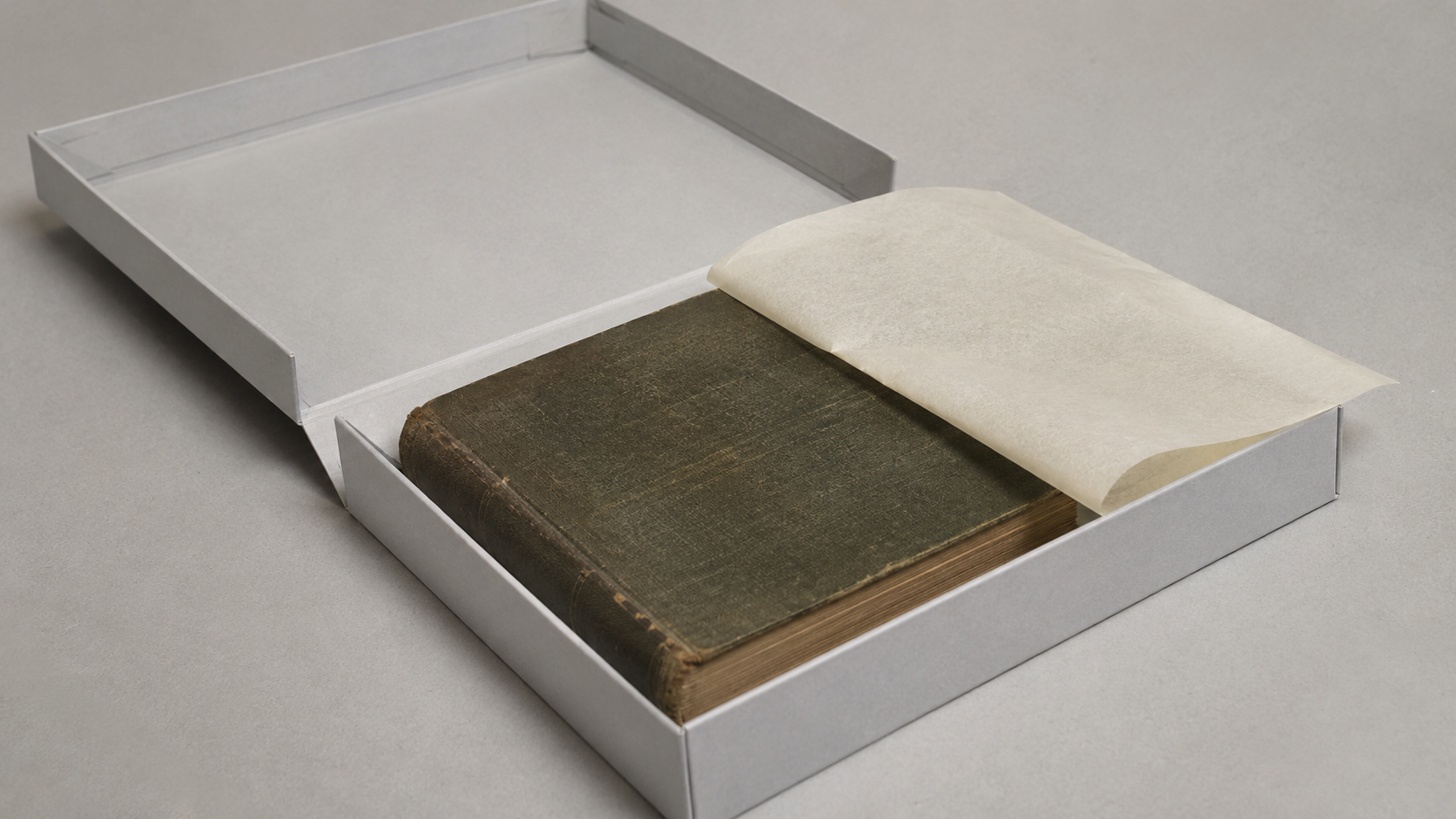
Stable temperature and relative humidity slow down degradation processes, and fluctuations in these parameters are more harmful than constant, slightly higher values. After conservation, objects are stored in acid-free folders and boxes, away from light sources. Exposure to UV radiation accelerates the re-yellowing process. Therefore, objects on public display should be protected by UV-filtering glass or illuminated using light sources with low ultraviolet emissions. Conservation documentation should accompany the object at all times, enabling future conservators to make informed decisions regarding further interventions.
Withholding bleaching is justified when discolouration does not impede the legibility of text or the reproduction of an object. Chemical intervention at that point offers no benefits proportional to the risks, and paper with natural patination, without active degradation processes, can be stored without bleaching for decades to come. Objects of exceptional historical or artistic value require particular care, as traces of use, fingerprints, or stains may be evidence of the object's authenticity and history.
Paper that is very brittle and weakened is not a good candidate for bleaching. The process requires water baths or the application of solutions. This mechanically stresses the structure. An object that cannot withstand immersion should first undergo consolidation and strengthening, and only then, if at all, bleaching.
The decision not to bleach the paper is a conscious conservation choice: stabilising storage conditions, deacidification and documenting the condition of the item protect the paper effectively and without the risk of irreversible changes.
Paper yellows due to the oxidation of lignin and the degradation of cellulose. This process is accelerated by acids, moisture, temperature, contaminants, and microorganisms.
The treatment involves the chemical or photochemical removal of substances responsible for the discolouration of paper.
Conservation uses chlorine, peroxide, reductive methods, and photochemical bleaching with UV radiation.
Most often when discolouration makes it difficult to read text, reproduce an object, or affects the perception of drawings and graphics.
Yes. Bleaching agents can weaken paper fibres, affect inks and pigments, and accelerate later degradation.