A damaged spine, loose pages, or a torn cover are problems that almost every owner of a home library faces. While the desire to quickly glue a disintegrating volume is completely understandable, hasty actions often lead to irreversible damage. Attempting to save valuable collections with office tape or aggressive woodworking glues is the quickest way to chemically degrade the paper. So, how do you repair a book step by step to preserve its structural integrity and historical value?
The key to success is combining rigorous conservation standards with the right materials, which you can successfully use in your home workshop. Discover proven bookbinding techniques that will safely extend the life of your favourite reads.
The biggest sins of home book repair – absolutely avoid these!
A lot of harmful myths have grown around book restoration, which regularly lead to the vandalism of valuable collections. What should absolutely be avoided?
- Standard adhesive tape Cellulose tape (like Scotch tape) is extremely acidic. Its polymers bond with paper, and over time, they oxidise, turn brown, and irreversibly burn cellulose fibres.
- Polyurethane and wood glues: These are adhesives intended for rigid wooden structures. They have an acidic pH (often 3.0-5.5) and form an extremely hard bond when dry. A book is a mechanism that is worked every time it is opened. A hard adhesive does not absorb stress, which results in the brutal tearing of the paper sections.
- Myth of white gloves Although popular culture suggests otherwise, handling old books in cotton gloves is a mistake. According to the Library of Congress's guidelines, cotton drastically reduces tactile sensation, which increases the risk of tearing brittle pages. The gold standard is to work with clean hands that have been washed free of lotions and thoroughly dried.
Home workshop equipment – what will you need?
For the intervention to be safe for the cellulose, you must procure the appropriate chemicals and tools. Professional Specialist adhesives Bookbinding tools and accessories are an investment that guarantees compliance with conservation standards.
Your home workshop should contain:
- Bookbinding quality PVA glue: Vinyl octate is an absolute fundamental. It must be acid-free (pH 7.0). When cross-linked, it forms an extremely flexible, transparent film that works with the book's spine.
- Starch pasta A natural adhesive, representing the gold standard for repairing small tears in antique paper.
- Bookbinding board A tool made of polished bone or Teflon. It is used for bending and smoothing paper, and for applying glue precisely into gaps (e.g. when tightening hinges).
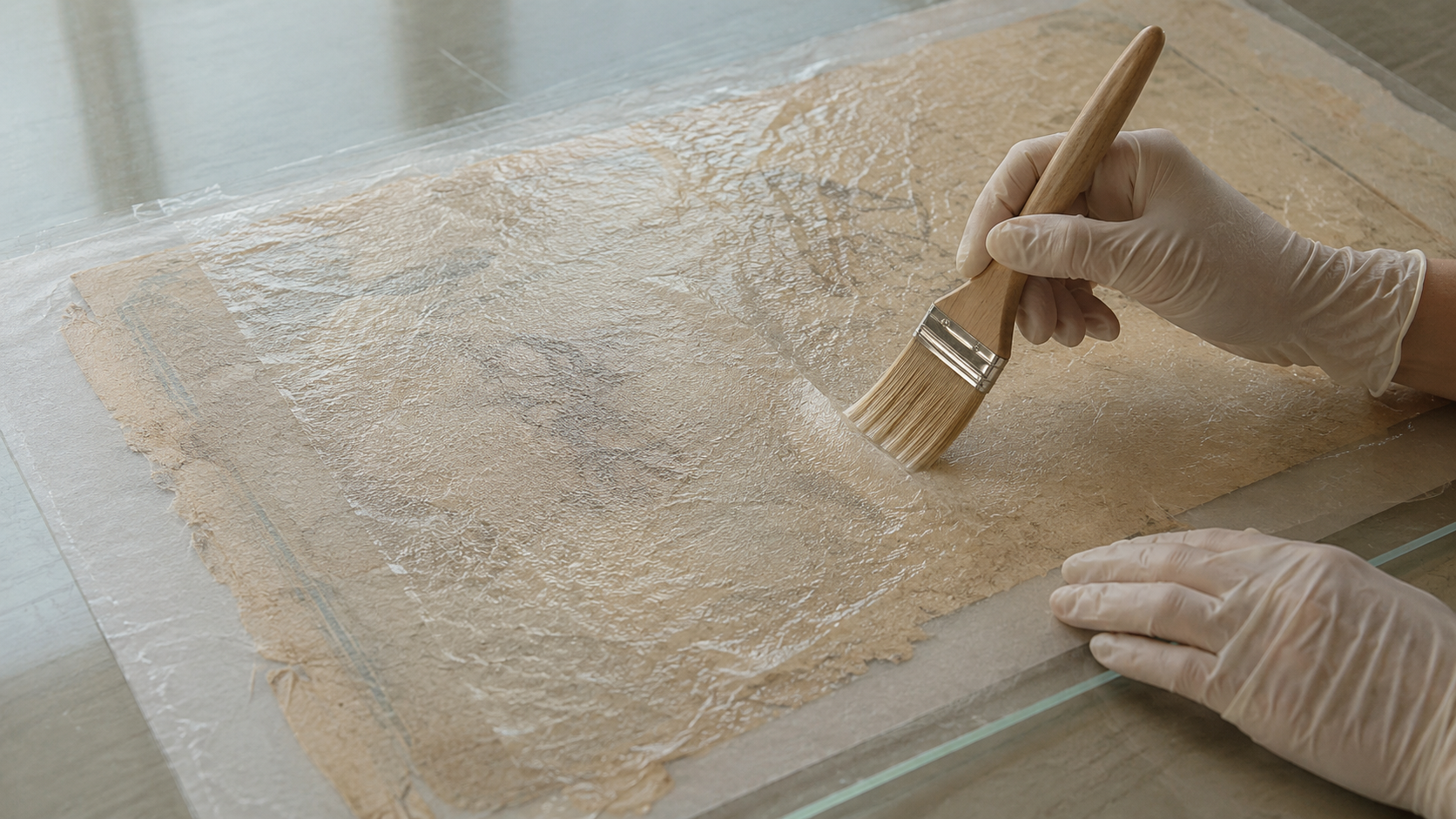
- Japanese paper (washi/kozo): Translucent, extremely thin yet durable paper made from long plant fibres. Combined with a starch paste, it creates invisible bridges over tears.
- Acid-free adhesive tapes (filemoplasts) Specialist, pH-neutral bookbinding tapes, designed for reinforcing spines and repairing minor tears.
- Flat boards and cramps (or a bookbinding press): Essential for maintaining tension during the 24-hour adhesive curing process.
How to repair a book step-by-step – rescuing a paperback with the fan method
One of the most common faults is a cracked, disintegrating spine in glued books (so-called paperbacks). When individual pages start to fall out, the most effective technique for compacting the block is the „Double-Fan Adhesive Binding” method. Here's how to carry out this process:
- Breakdown of the cover: Begin by surgically and very carefully separating all loose sheets of text from the remnants of the old cardboard binding.
- Cleaning the binding groove This is a critical step. Using a scalpel, spatula, or fine-grit sandpaper, remove the cracked, yellow layer of old adhesive from the edges of the block. New PVA glue must bond with the raw paper fibre, not with the old, dead binder underneath.
- Compacting (Block vice): Perfectly align all the sheets by tapping them on a flat surface. Then, place the text block between two straight boards (or in a book press) so that the spine protrudes by a fraction of a millimetre. Clamp the structure tightly with C-clamps.
- Left fan (Phase one): Using a stiff brush, begin to apply acid-free PVA glue to the edge of the spine. At the same time, use your thumb to gently fan the free edges of the pages to the left. The aim is for the micro-film of glue to penetrate to a depth of about 0.5 mm between the individual pages.
- Right Fan (Phase two): Repeat the process straight away, this time fanning the sheets to the right and applying another thin layer of PVA. This two-way method ensures that every single sheet is bonded to the flexible core.
- Positioning and pressure Reapply the recovered (or new) cover. Clamp and press the book with a weight for a minimum of 24 hours. Remember to place strips of waxed paper between the endpapers and the text block to prevent the pages from sticking together unintentionally at the margins.
Pasting in a single page (Tipping-in)
If only one page has come loose from the integrated, sewn block, use the sheet-gluing technique. Apply an extremely thin strip of PVA glue (approximately 3 mm wide) strictly along the spine edge of the loose page. Then, using a bookbinding tool, carefully slide the page deep into the book’s gutter and press it down firmly. Close the volume and place a weight on top for a dozen or so hours.
Prevention, or the enemies of your book collection
Even the best restoration won't last if books are returned to a destructive environment. As a conscientious collector, you must monitor the environmental parameters that directly affect the kinetics of cellulose degradation.
- Thermal shock The optimum storage temperature is 15.5°C – 21°C. The laws of thermodynamics are unforgiving in this case: a temperature increase of just 5.5°C doubles the rate of acid hydrolysis, leading to rapid yellowing and brittleness of the cards.
- Humidity fluctuations (RH): The ideal relative humidity level is between 30% and 50%. Levels exceeding 65% are guaranteed to cause a proliferation of mould spores. Conversely, a drop below 30% (e.g. during the heating season) causes fibres to shrink, covers to crack and bookbinding adhesives to crumble.
- Photodegradation (UV Radiation): Direct exposure to sunlight will burn binders and accelerate oxidation. Collections should be isolated from direct window sunlight.
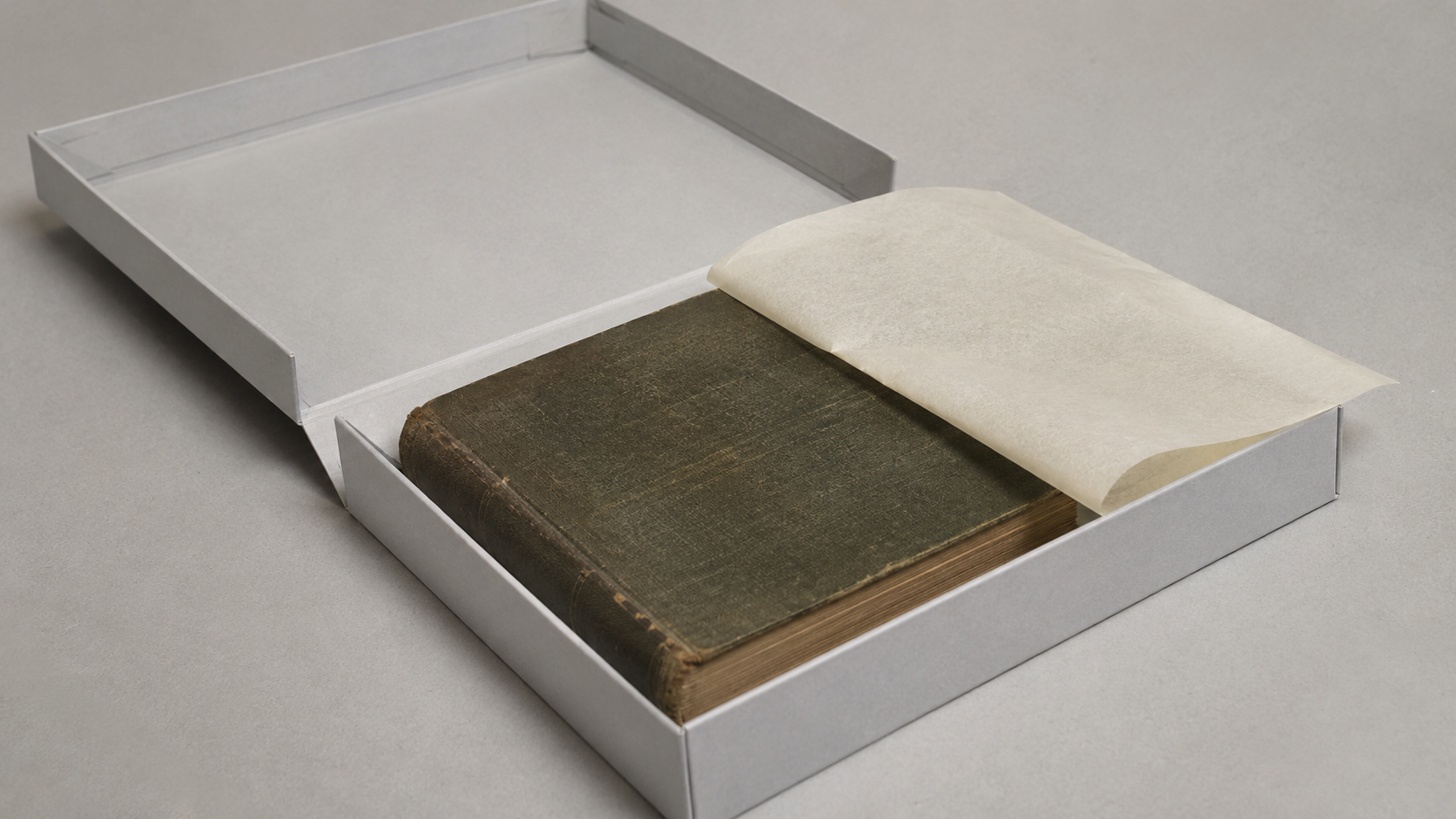
It is worth protecting the most valuable copies before they are damaged. Certified storage and archiving products, such as acid-free boards and boxes with an alkaline buffer, which absorb harmful acids migrating from the environment, are used for this purpose.