Have you ever pulled out a crumpled grandfather's birth certificate, a long-ago stained and creased map, or a precious certificate resembling a concertina from a drawer? The first instinct usually suggests two solutions: putting the document under a pile of the heaviest encyclopaedias or... reaching for the household iron. From a conservation perspective, both these ideas can lead to irreversible disaster.
Old paper is extremely delicate, and the cellulose fibres trapped within it lose their elasticity over time. In this guide, you will learn, How to safely straighten creased pages, based on proven, non-invasive methods. We will explain why temperature is your greatest enemy and show you how to perform a professional paper „relaxation” treatment step-by-step in your own home.
This is one of the most harmful and frequently repeated myths: „if I iron a cotton shirt, I'll iron paper too, since it's also a fibre.” Unfortunately, physics says otherwise. The short cellulose fibres, upon contact with the fierce, dry heat from an iron (even on the lowest silk setting, which reaches 90–120°C), literally „cook”. The water naturally bound within the paper evaporates instantly, making the sheet brittle and yellow.
But it's not the burning of the paper itself that's the biggest risk. The real tragedy befalls what is printed on it:
When creased, dry paper is forcibly straightened, it often cracks along the folds. What do we do then? We reach for the most ordinary, office tape. This is another mistake that all state archives strongly warn against.
The adhesive from standard tape degrades instantly and penetrates deeply into the fibres, creating unsightly, rust-yellow stains. For a professional conservator, removing just 2.5 centimetres of such tape is often as much as Three hours of arduous work using strong solvents under a microscope! If your document is torn, instead of office solutions, use professional conservation tape, such as acid-free Filmoplast, which is safe for artefacts and does not yellow over time.
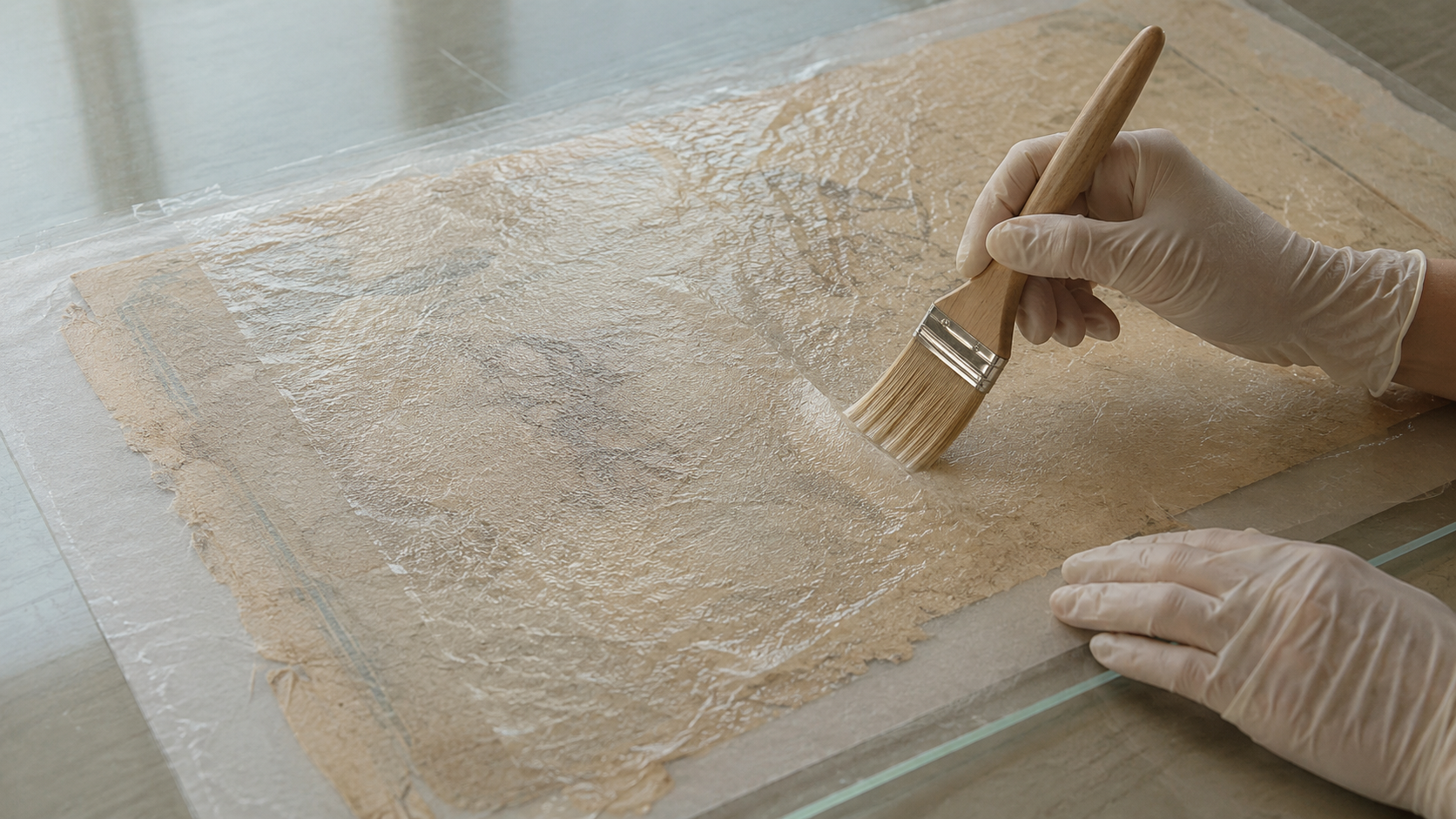
Since you can't iron it hot or bend it dry, how do you straighten paper? The key to success is moisture relaxation. Before you apply any pressure, you need to gently loosen and make more flexible the petrified, dry cellulose fibres.
You don't need a sophisticated laboratory. Simple elements are sufficient to create a safe and humid environment for your keepsake:
Duration: Leave the document for 2 to 4 hours, checking on it every half hour or so. When the process is complete, the paper will be slightly cool to the touch, flexible and will yield under the weight of your fingers without „crunching.”.
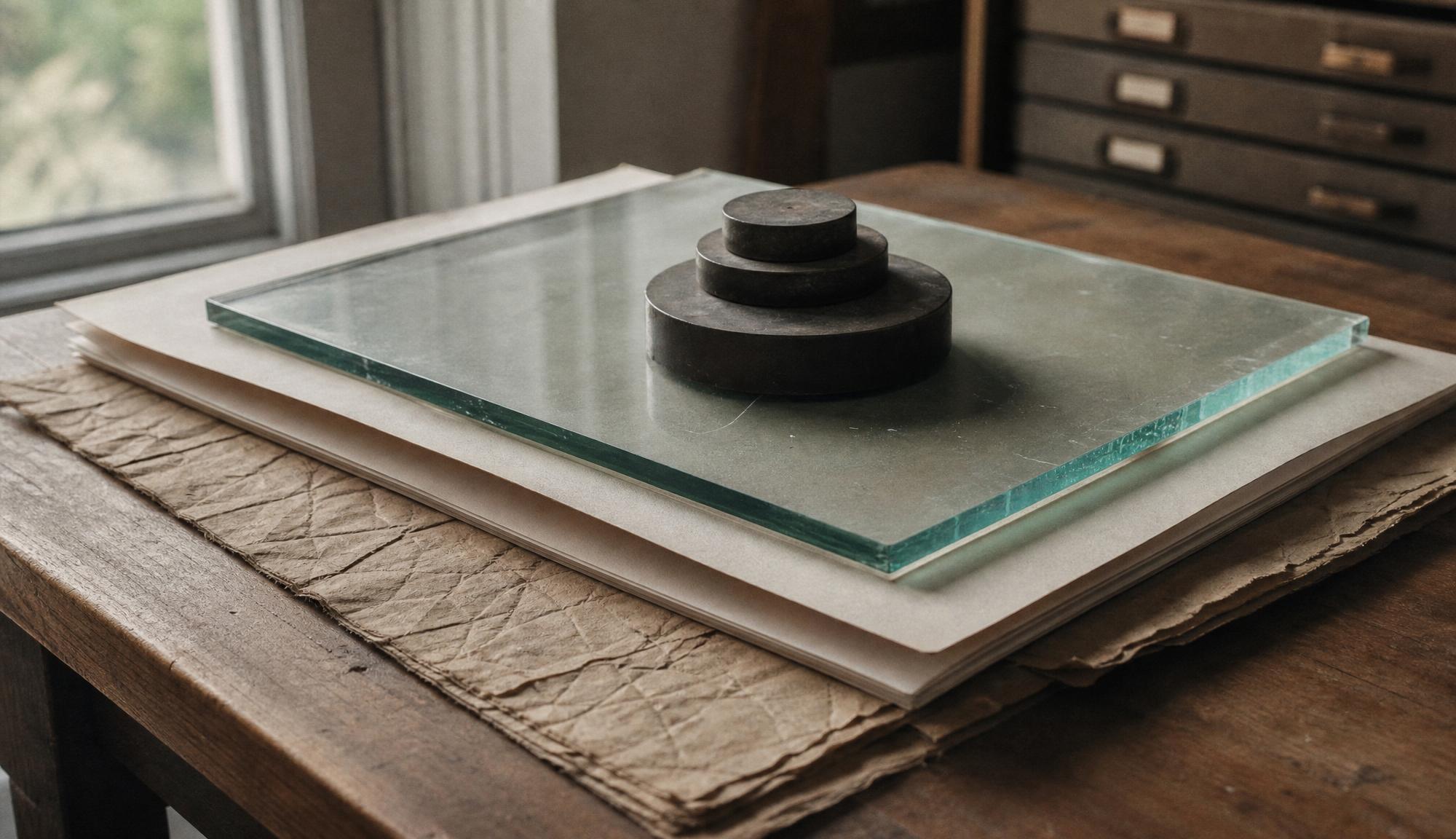
Once you have retrieved your relaxed, slightly damp, and soft document from the chamber, you must dry it under even pressure. Conservators call this Cold Pressing, which is cold pressing.
Leave the entire thing completely undisturbed for 12 to 24 hours. If after this time the paper is still slightly cool (which means it still contains moisture), replace the outer blotting papers with dry ones and leave the document under weight for another day.
Straightening old, valuable documents is a process that requires patience, not high temperatures and brute force methods. Replacing a domestic iron and office tape with a safe humidity chamber and cold pressing is a guarantee that you won't damage your family heirloom.
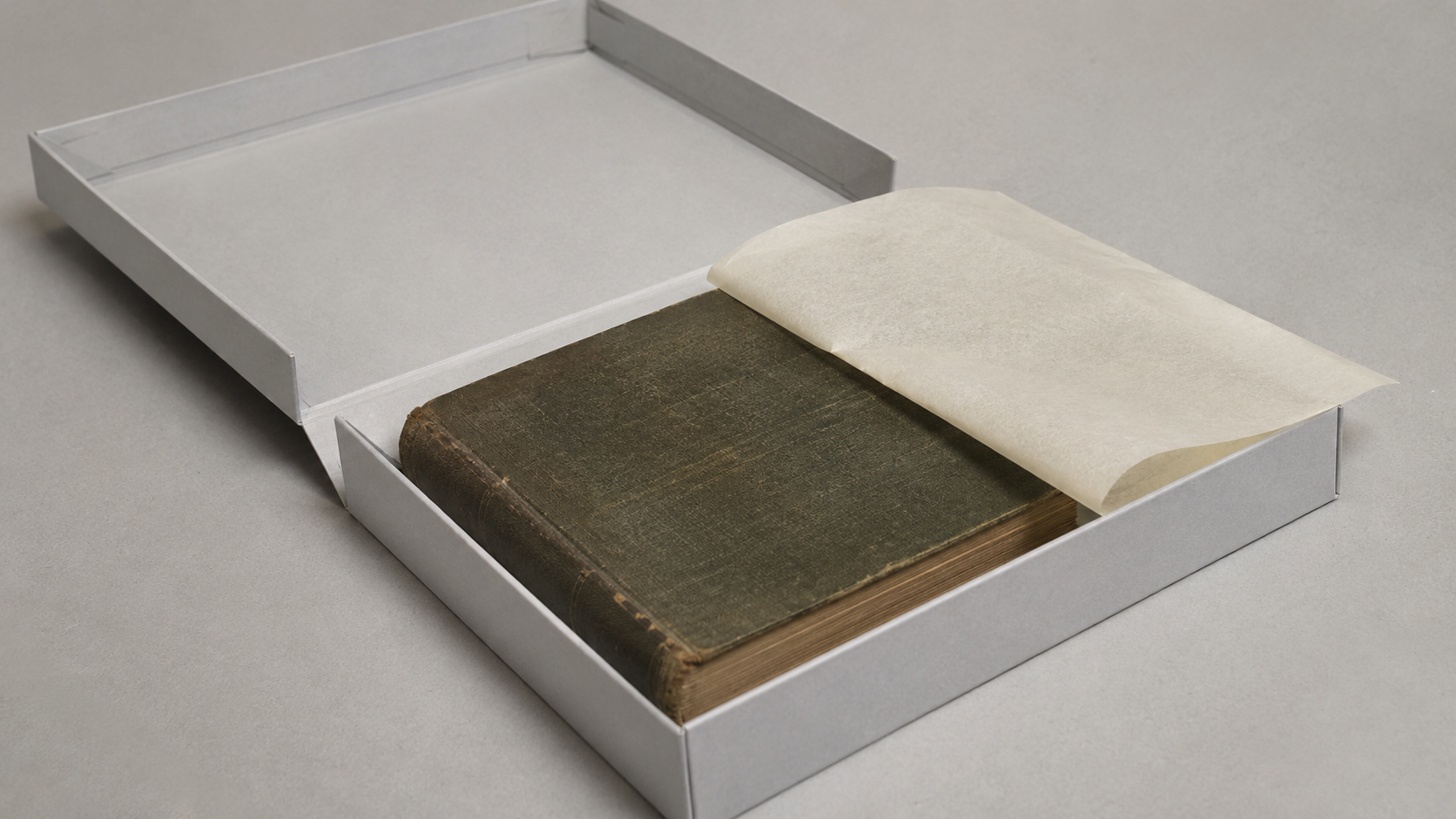
Once your letter, deed, or diploma has regained its perfectly flat shape, ensure it never gets creased again. It is best to protect straightened collections by transferring them to special, rigid folders and boxes. Certified, acid-free products designed for storage and archiving you will find in the CartaPro offer, which will allow you to enjoy your saved treasures for many decades in perfect condition.