The attempt to restore the shine to old volumes often ends tragically for them. The desire to remove years of dust, unsightly stains, or peculiar smells leads many enthusiasts to resort to home remedies, which are considered destructive in the world of professional conservation. Appropriate book cleaning agents differ diametrically from household chemicals, and the cleaning process itself requires an engineering understanding of the structure of the paper and binding.
The golden rule, followed by leading institutions such as the Canadian Conservation Institute, is to prioritise dry cleaning (the so-called „Dry-First Discipline”). The use of water, even deionised, without conservatorial supervision can lead to the leaching of historical binders and irreversible weakening of the paper. From this article, you will learn, How to safely clean an old book, What tools to use so as not to damage cellulose fibres, and what popular myths to avoid in order not to destroy a home book collection.
Before you choose a cleaning method, you must accurately identify the nature of the problem. Not every stain is ordinary dirt that can be wiped away.
A home and library book is a ticking biological time bomb. It forms a reservoir of carbohydrates and fats, providing a food source for insects (such as silverfish) and dormant mould spores. On the other hand, specialists at the British Library advise against removing so-called historical deposits during cleaning. Wax drips on old manuscripts, historical sand once used to dry ink, or dried plants are valuable evidence of the volume's use in past eras.
Reddish or rust-brown spots, known as foxing, can often be observed on old paper. It is a mistake to treat them as surface dirt. This is a result of localised oxidation of trace amounts of metals (e.g. iron) present in the paper pulp or a residue from dormant fungi. Mechanical cleaning will not help in this case. Foxing removal is a job for a qualified conservator, requiring chemical baths.
A similar degree of caution should be exercised with 19th-century leather bindings. If the leather on the spine crumbles into a loose, rust-red powder, you are dealing with the phenomenon known as Red Rot. This occurs as a result of the absorption of sulphur pollutants from the air. Such a book must not be dusted or rubbed, as this will accelerate its complete disintegration.
This is the biggest threat to collections and your health. Active mould is damp, sticky and has characteristic fuzzy structures (mycelium). It must not be cleaned mechanically, as this will only push the pathogen deep into the paper. You must first bring it to a dormant state (e.g. by reducing humidity in the room), and only when it becomes dry and powdery should you proceed with precise removal while wearing a protective mask.
Understanding the safety of cleaning agents is based on the pH scale. This scale is logarithmic, meaning that a difference of one unit is actually a tenfold increase in acidity or alkalinity.
Popular household cleaning agents are deadly to old books. The application of acidic solutions, such as homemade vinegar or lemon juice (pH 2.0 – 4.0), immediately catalyses the process of acid hydrolysis. The result? The breaking of cellulose polymer chains and a drastic decrease in paper strength, which will eventually begin to break under its own weight. In turn, strongly alkaline agents, such as chlorine bleaches, baking soda solutions or ammonia-based preparations (pH 8.0 – 13.0), cause aggressive oxidation, fibre swelling and the complete destruction of historical inks.
For the full safety of cellulose, professional Cleaning and maintenance preparations they must operate within a narrow, neutral pH range, oscillating between 6.8 – 7.2. Such a value guarantees that the process of contaminant removal will not disrupt the delicate chemical bonds of the artefact.
The internet is full of advice that, in light of materials science research, turns out to be highly detrimental. If you want to preserve your collections for years to come, avoid the following practices:
Instead of domestic experiments, reach for engineering solutions dedicated to the archival industry. The gold standard in dry cleaning is specialist structural sponges. These are blocks made of vulcanised latex combined with factice (synthetic oil). They have a perfectly neutral pH (7.0) and are free from harmful chlorine and sulphur compounds. Their phenomenon lies in their self-cleaning mechanism. When you rub a sponge over a dry paper surface or binding, it absorbs dirt, and the contaminated layer immediately crumbles and detaches. This prevents the polishing effect, i.e. forcing dirt into the pores of the artefact.
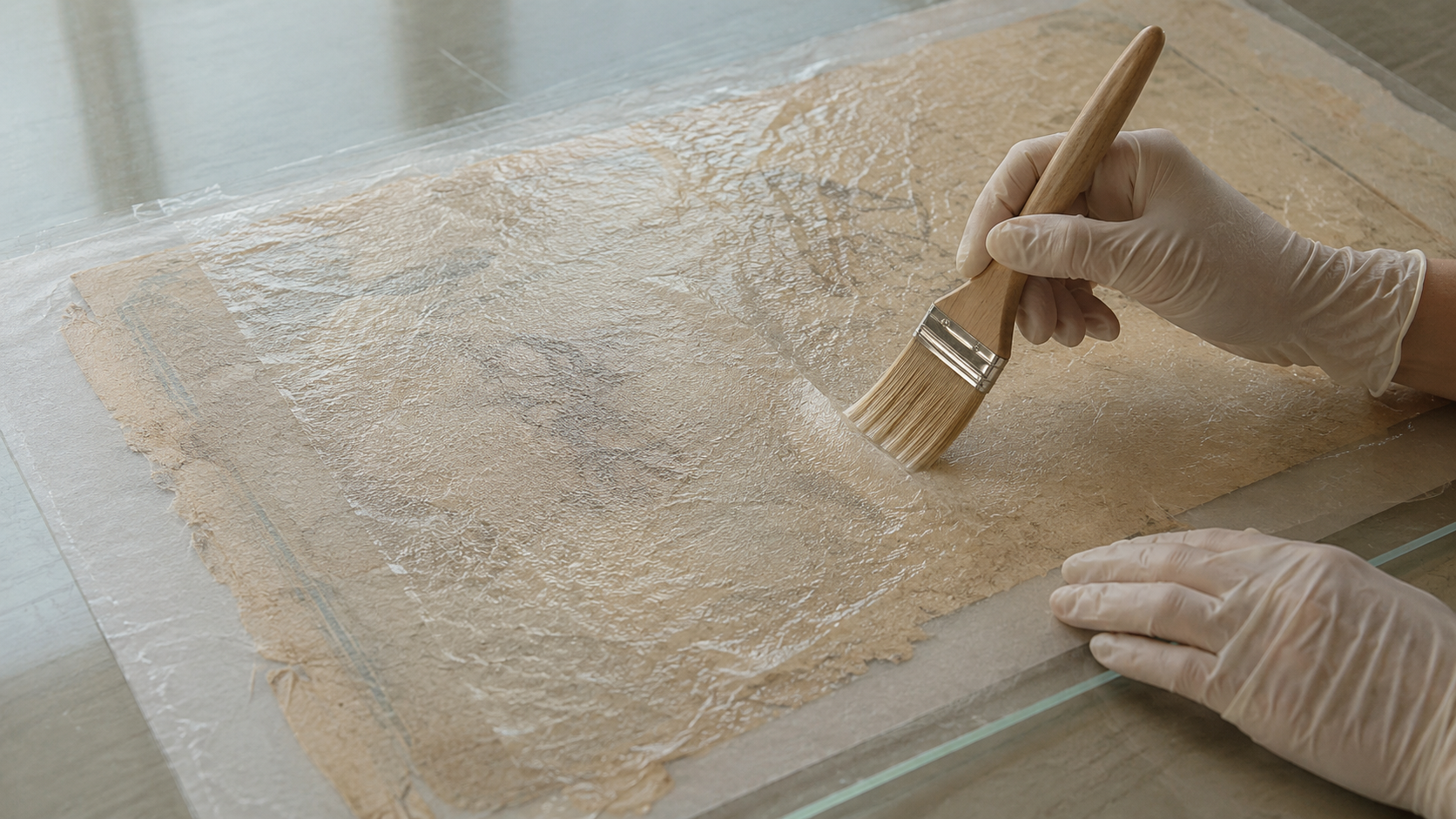
If old paper shows strong signs of acidification (it is yellowed and extremely brittle), mechanical cleaning alone will not be enough to halt its degradation. In such cases, professional Paper deacidification materials, which introduce a so-called alkaline reserve into the cellulose, protecting the object from harmful environmental influences for decades to come.
Based on the rigorous security protocols of the American institute NEDCC, we present the correct procedure for the mechanical cleaning of a volume, free from active mould and advanced red rot of the leather.
The protection of archival materials against the constant need for invasive cleaning relies on the normative control of the microclimate. According to the updated ISO 11799 standard, furniture and ventilation systems are an integral part of preventative conservation.
The key alert thresholds to be aware of are:
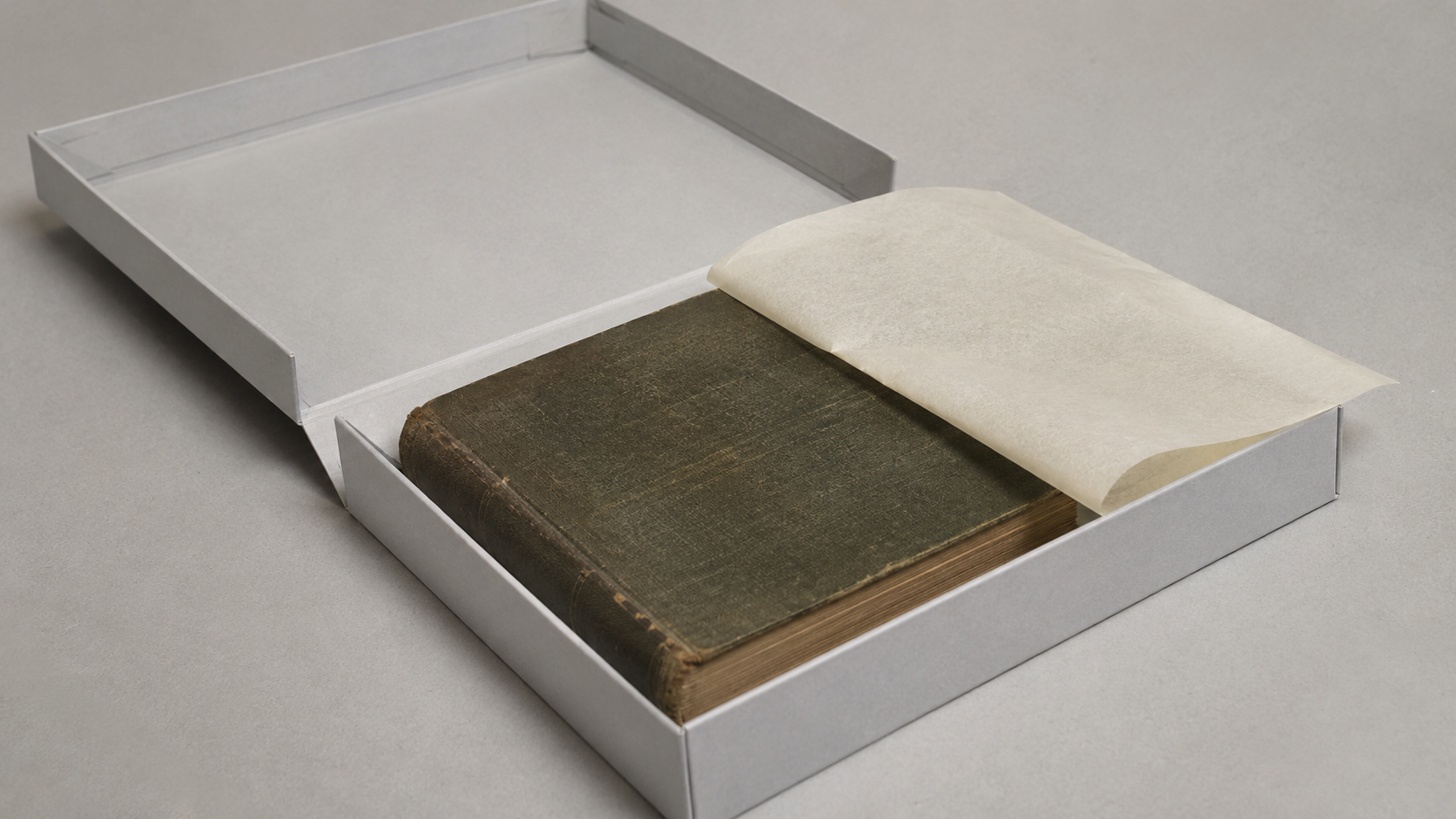
The complement to environmental control is appropriate storage and archiving. Placing valuable objects in boxes or folders made of certified acid-free cardboard provides an excellent physical barrier against settling dust, dirt, and fluctuating humidity.